A
Orientation
Map the decision, open questions, tradeoffs, and evidence that shape the room.
Cumora readiness map
Use this independent guide to understand Cumora, decide whether a room deserves AI teammates, and open the Cumora planning runtime when you are ready to turn the idea into a working brief.
Direct answer
Cumora is presented by its official site as a chat app for humans and AI agents. The important part is not just that people can talk to an assistant. Cumora frames agents as teammates with persona, memory, and status, then places them in rooms where they can help with planning, thinking, critique, and follow-through.
That makes the adoption question different from a normal chat tool. A good Cumora room needs a clear reason to exist, a human owner, boundaries around memory, and a small set of agent roles that do not duplicate one another. A weak room becomes another channel to manage. A strong room becomes a compact operating space where people and agents share context without turning every decision into a thread pile.
Cumora Guide focuses on that middle layer: the readiness work between curiosity and rollout. Use the guide to understand the official product claims, inspect the starter-agent pattern, draft a first room, and then open the planning runtime to turn the idea into a structured brief. For product access, current preview status, and downloads, use the official Cumora site.
Interactive check
A room is worth creating when the work needs shared context, different agent roles, and visible handoffs. Use the checks below before adding more voices.
Clarify the room before inviting agents.
Starter-agent pattern
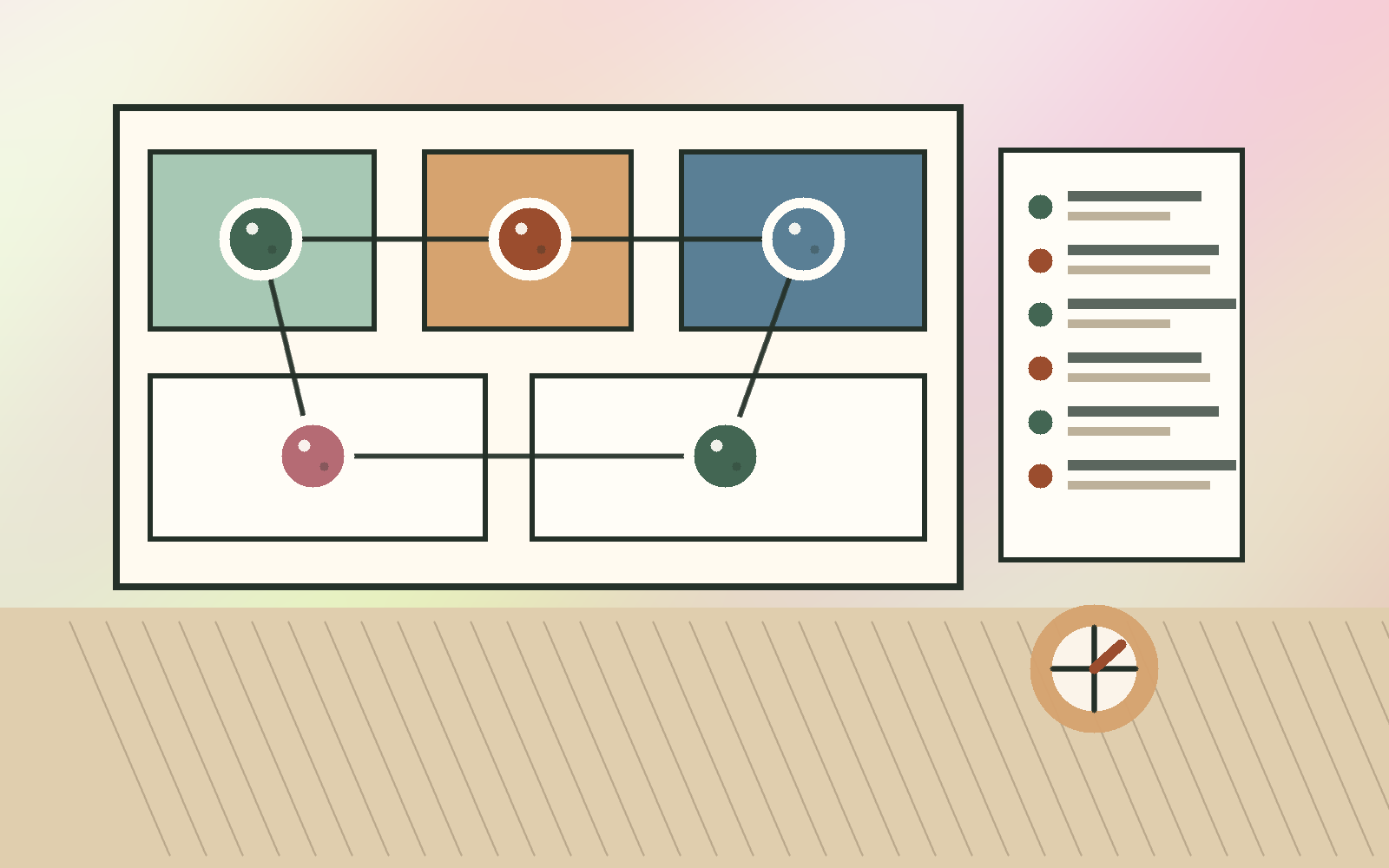
The official Cumora page names Atlas, Iris, Bram, and Nova as starter agents. Treat those names as a reminder to separate orientation, planning, critique, and momentum.
Use an analyst-style teammate to map unclear context, compare options, and keep the decision surface calm before a workspace gets crowded.
Map the decision, open questions, tradeoffs, and evidence that shape the room.
Turn scattered intent into sequence, owners, due dates, and handoff points.
Find weak assumptions, privacy edges, duplicate roles, and reasons to stop.
Draft the first artifact, summarize the room, and keep the next step moving.
Room brief
A useful Cumora brief should be short enough to read before a meeting and specific enough to stop duplicate agents from appearing. Start with the decision the room owns. Instead of writing "help us with launch planning," write the choice that keeps coming back: which launch risks need weekly review, which evidence changes the plan, and who can approve the next move.
Then name the roles as jobs, not personalities. One agent may gather facts, another may sequence work, another may challenge assumptions, and another may turn the result into a draft. If two agents would read the same source, ask the same question, and produce the same paragraph, the room is not stronger. It is just louder.
Memory needs the same discipline. A Cumora room can be valuable because context persists, but persistent context should still have edges. Record what the room should remember, what should be refreshed from source pages, and what should never be stored as a reusable assumption. For sensitive work, keep the first brief deliberately narrow until the team understands what the room is retaining.
Finally, define the stop condition. The best first room is not permanent by default. It earns more scope after people can see clearer decisions, cleaner handoffs, and fewer repeated explanations. If the room cannot reduce a recurring coordination cost, keep the workflow in a simpler chat or document until the need becomes real.
Weekly planning, research review, hiring calibration, product QA, or any loop where the same context returns and the same roles keep helping.
A broad "team assistant" with no owner, no repeat decision, vague memory, and a goal that could be solved with one normal prompt.
Use the runtime when the brief is concrete enough to turn into a planning console flow with tenant identity, analytics, and payment boundaries.
Planning runtime
The runtime opens a verified Cumora Guide tenant with the site brand, return path, and strict product identity. It is built for planning the first room, not replacing the official Cumora app.
Checking Cumora Guide runtime...
Tenant identity, Cumora Guide branding, a return URL for this site, and a strict payment identity flag so checkout cannot silently fall back to another product.
See pricing boundaryUse and avoid
Recurring work where people and agents need to return to the same context, roles, and decisions.
Sensitive work where memory, permissions, or external sharing are not yet understood by the team.
A quick question, a private draft, or anything that only needs one assistant response and no shared room.
Give a new Cumora room one narrow loop for the first week. A product room might review feedback themes, a research room might compare sources, and an operations room might turn recurring updates into a daily brief. Keep the number of agents small enough that every message has a job. If the room creates more summaries than decisions, pause and tighten the brief before expanding.
At the end of the week, judge the room by evidence. Did the human owner make decisions faster? Did the agents disagree in useful ways? Did memory reduce repeated context-setting, or did it preserve assumptions that should have been refreshed? These answers matter more than whether the room felt impressive on the first day.
Track three simple signals: the number of repeated explanations avoided, the number of handoffs that reached a human decision, and the number of agent outputs reused without heavy rewriting. A Cumora room is working when these signals improve together. It is not working when people still need a separate document to understand what happened.
This is also where the runtime helps. It can turn the rollout into a short planning flow, keep the Cumora Guide tenant separate from other products, and record whether visitors move from reading into a concrete room brief.
Pricing boundary
Cumora Guide pages are free to read. Optional paid console capacity uses a verified Cumora Guide product identity, with Polar handling payment.
Checkout readiness appears here.
Reference links
Always treat the official Cumora pages as the product source of truth. Directory and community pages are included to show how the market is describing the tool.
Questions
No. Cumora Guide is an independent guide. Use cumora.ai for official access, status, and product information.
No. The guide helps you plan a useful room and open a runtime brief. The official app remains the place to use Cumora itself.
The runtime provides the runnable planning console for this guide: room intent, role separation, handoff checks, and optional paid capacity when tenant products are ready.
Yes. The readiness checks are useful before access because they help you decide what room you would create and which agents should be invited first.